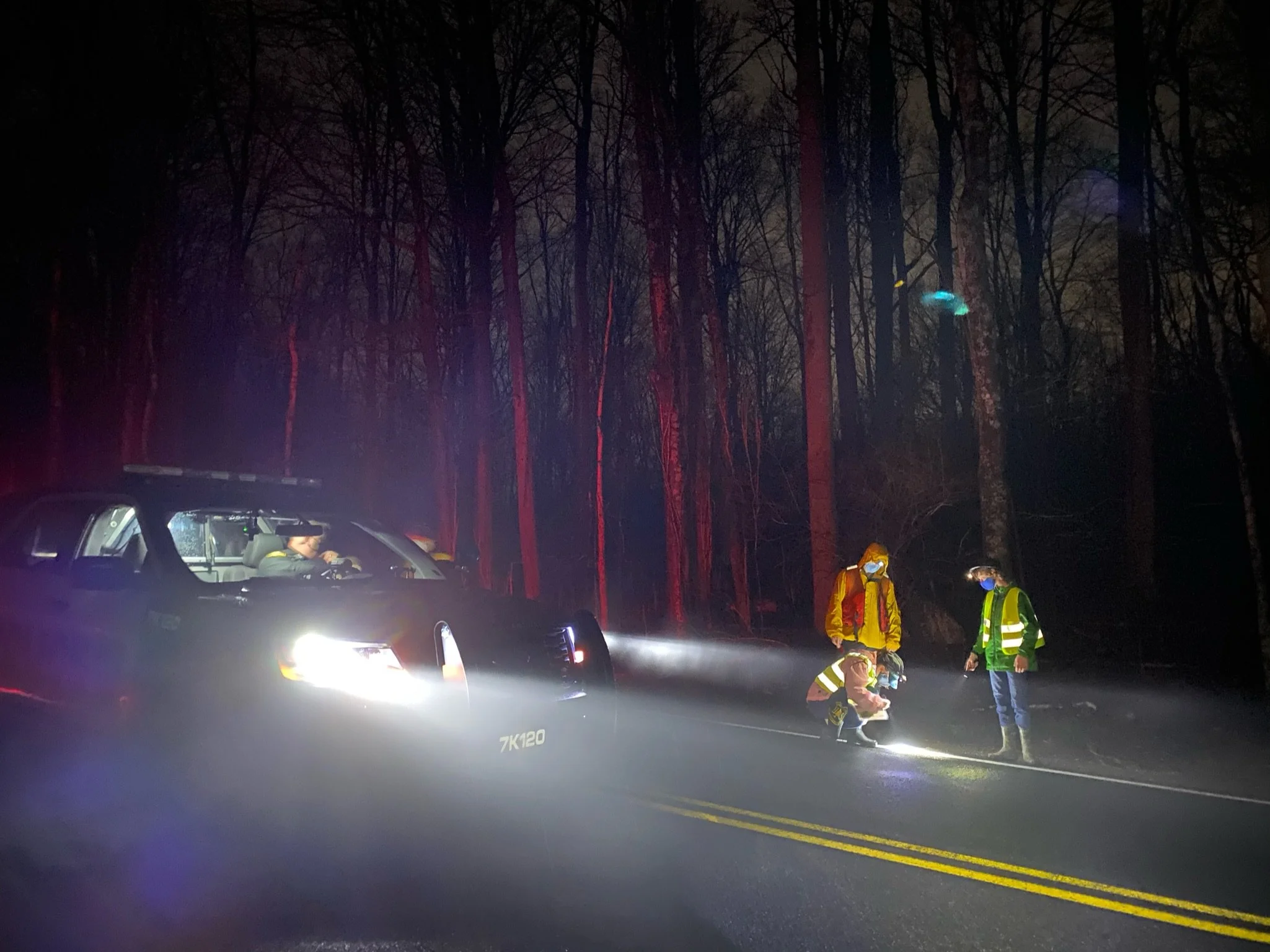
Photo by Dairo Chamorro
Amphibian Migrations
Big Night 2026: Hello Neighbor!
This year we are doing special outreach to neighbors who live on Mt Rutsen, Knollwood, and Vlei Roads. They will be receiving a letter from us. In collaboration with Winnakee Land Trust, the Village’s Climate Smart Task Force is creating alert systems for each of these three groups of neighbors. Our hope is that raising awareness will encourage neighbors to avoid driving on Big Night.

Be part of this annual effort!
If you live by a crossing — sign up to be notified when to avoid driving and squishing critters.
Or get involved tracking and identifying amphibians—and helping them safely cross the road to their woodland pools!
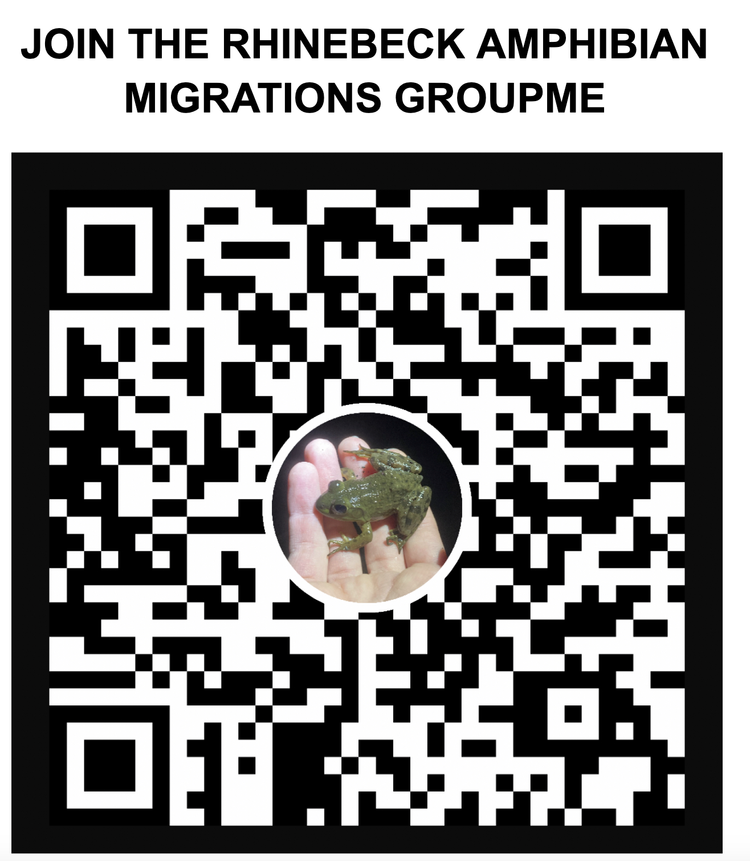
Sign up to receive general migration alerts for the Rhinebeck area. We use a text message-based system called GroupMe. If you don’t want to get exciting texts about migration spots, this may not be for you ;)
Register for a virtual training that you can do from your own home (Details on February trainings here). The Hudson River Estuary Program teaches you how to identify species and move creatures, and gives safety tips.
View recorded training presentations on YouTube.
Join the GroupMe chat to coordinate with others and share photos.
Go out with friends when Mother Nature sees fit! Stay safe! More on this below…
Report your data to the DEC by filling out a form describing what you saw and weather and location info.

LOCATIONS: Look for vernal pools by road crossings in your neighborhood. Ideally, these are walkable from your house or don’t entail you driving through the area of concern. You don’t want your car to inadvertently squish the very creatures you’re trying to help!
Winnakee and Climate Smart Rhinebeck have volunteers already targeting the locations on this marked-up NRI* map:
Vlei Marsh is an incredibly important natural area in Rhinebeck and now, thanks to Winnakee, it is protected
Knollwood, up the hill from Chancellor Livingston School
Mt Rutsen, by Ferncliff Forest
Photo by Vanessa Bertozzi

What is Big Night?
On the first warm, rainy night when conditions are right, you will hear peepers. It’s Big Night! You will head out shortly after sunset and stay as long as you can. Using flashlights, you will watch for and keep count of the amphibians you see, carefully helping them cross safely across the road. Afterwards, you can submit your data to the DEC.
WHEN: The migration is weather dependent. It could happen any time, usually between March and mid-April. Register with us so we can alert you when the conditions are right!
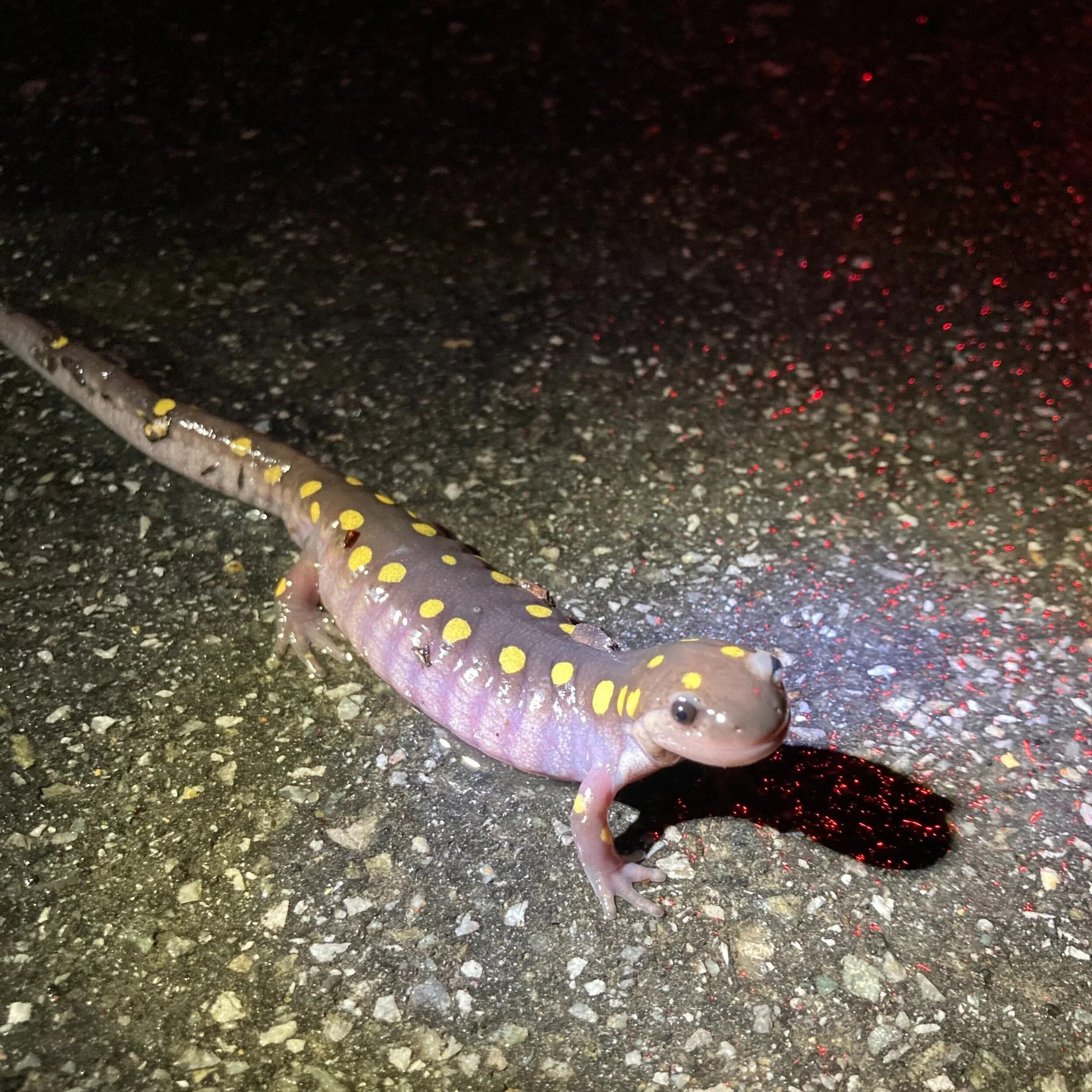
WHY VOLUNTEERING ON BIG NIGHT IS SO IMPORTANT: Each year as winter begins to wind down, salamanders, newts, frogs, and other amphibians who reside in the woods throughout our area are lured from their forest shelters on warm, rainy nights and migrate to woodland pools for breeding. This is known throughout the Northeast as Big Night. Unfortunately, migration pathways often cross roads and long driveways, leading to mortality of these slow-moving creatures, even in low traffic areas.
Amphibians are important links in forest food webs and indicators of healthy, functioning ecosystems. These seldom-seen creatures are declining throughout the world, and in New York, the Department of Environmental Conservation (DEC) has identified several as species of greatest conservation need in the 2015 State Wildlife Action Plan.
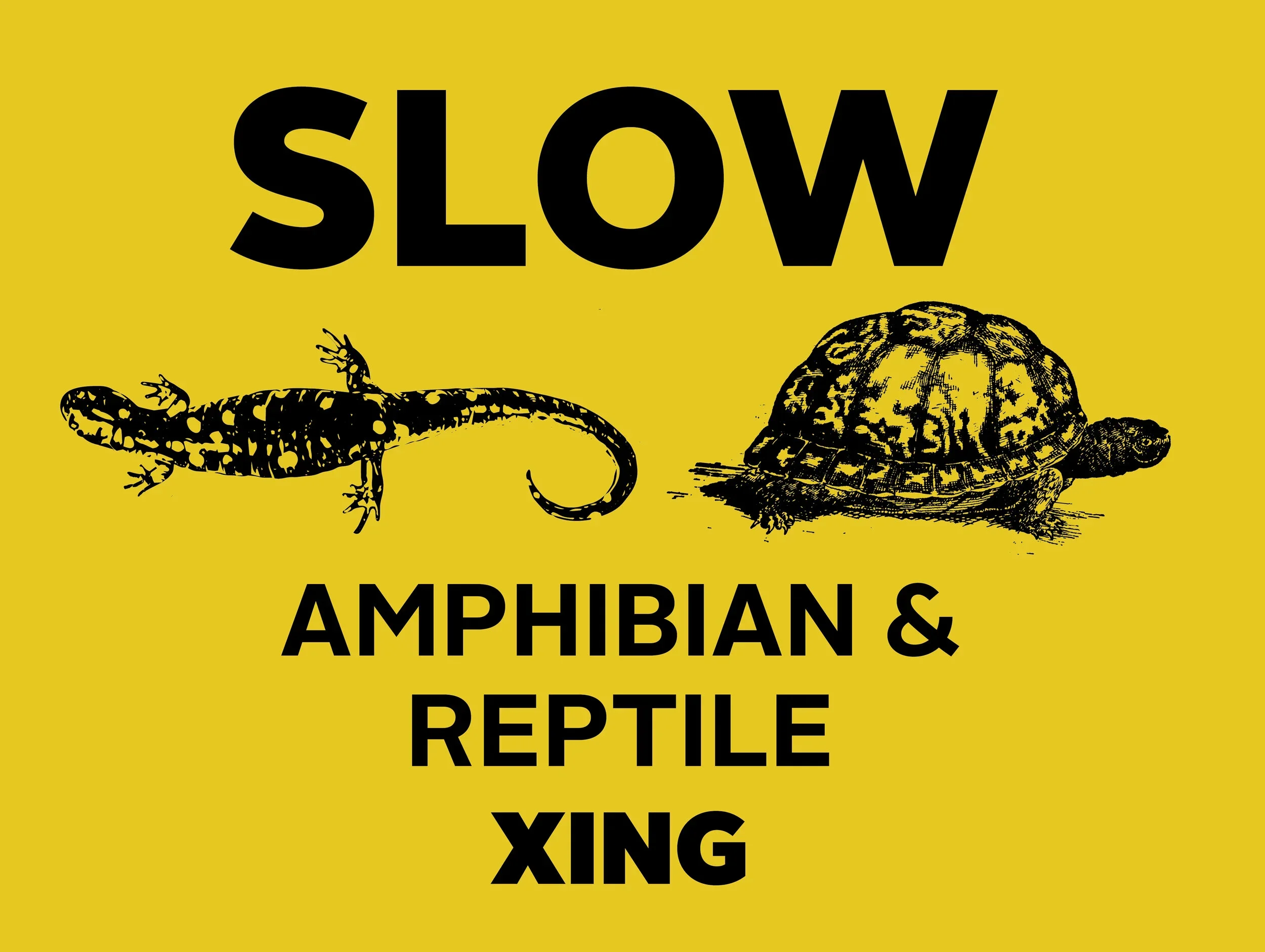
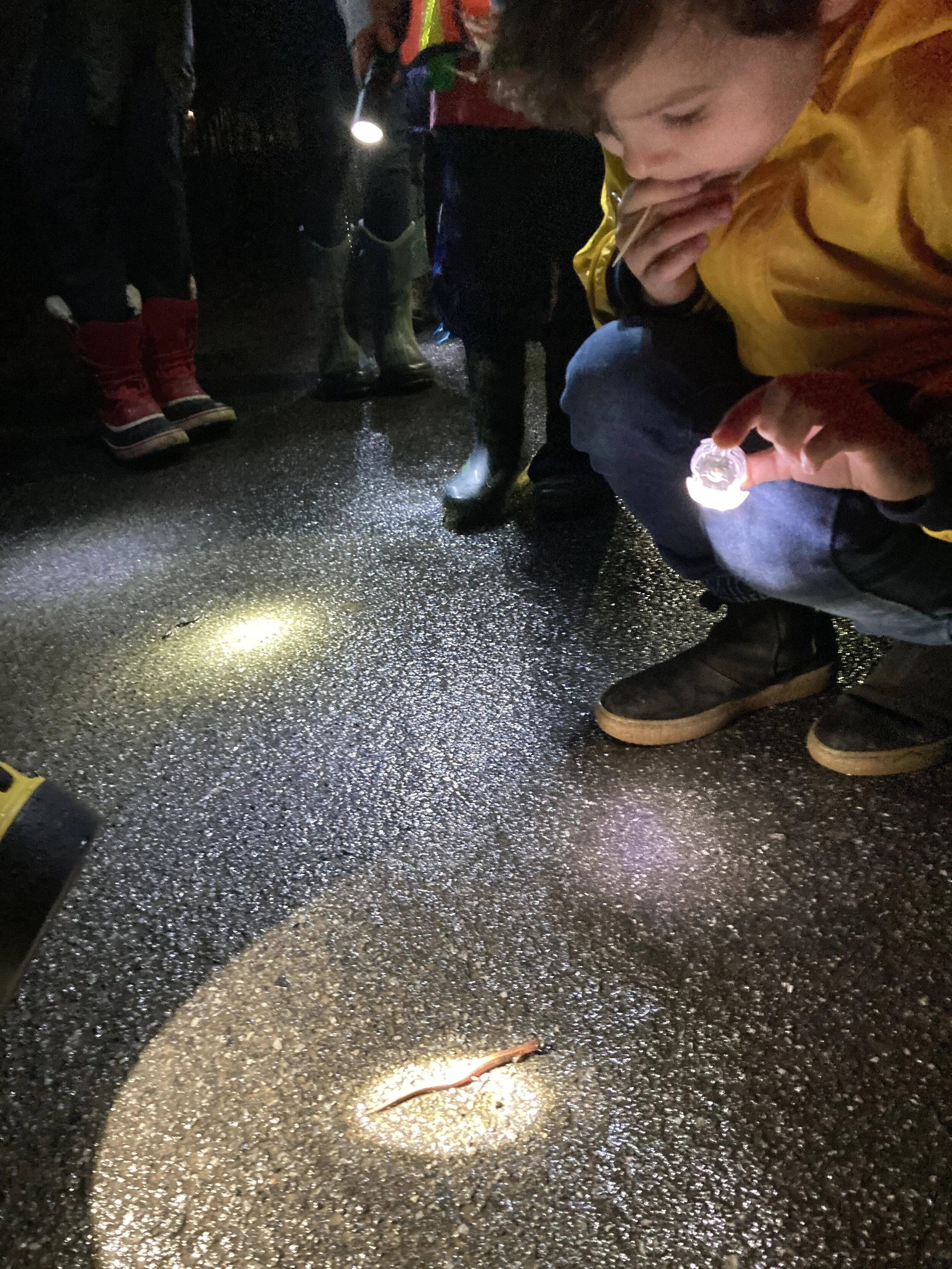
Photo by Vanessa Bertozzi
Ready, Set…Big Night
HOW TO PREPARE: We aren’t sure when the conditions will be just right, so pack a “go bag”: a backpack with your flashlight, clipboard, pen, forms (printable data collection form and identification cheatsheet. Have it packed and ready to roll when the notification arrives!
SAFETY:
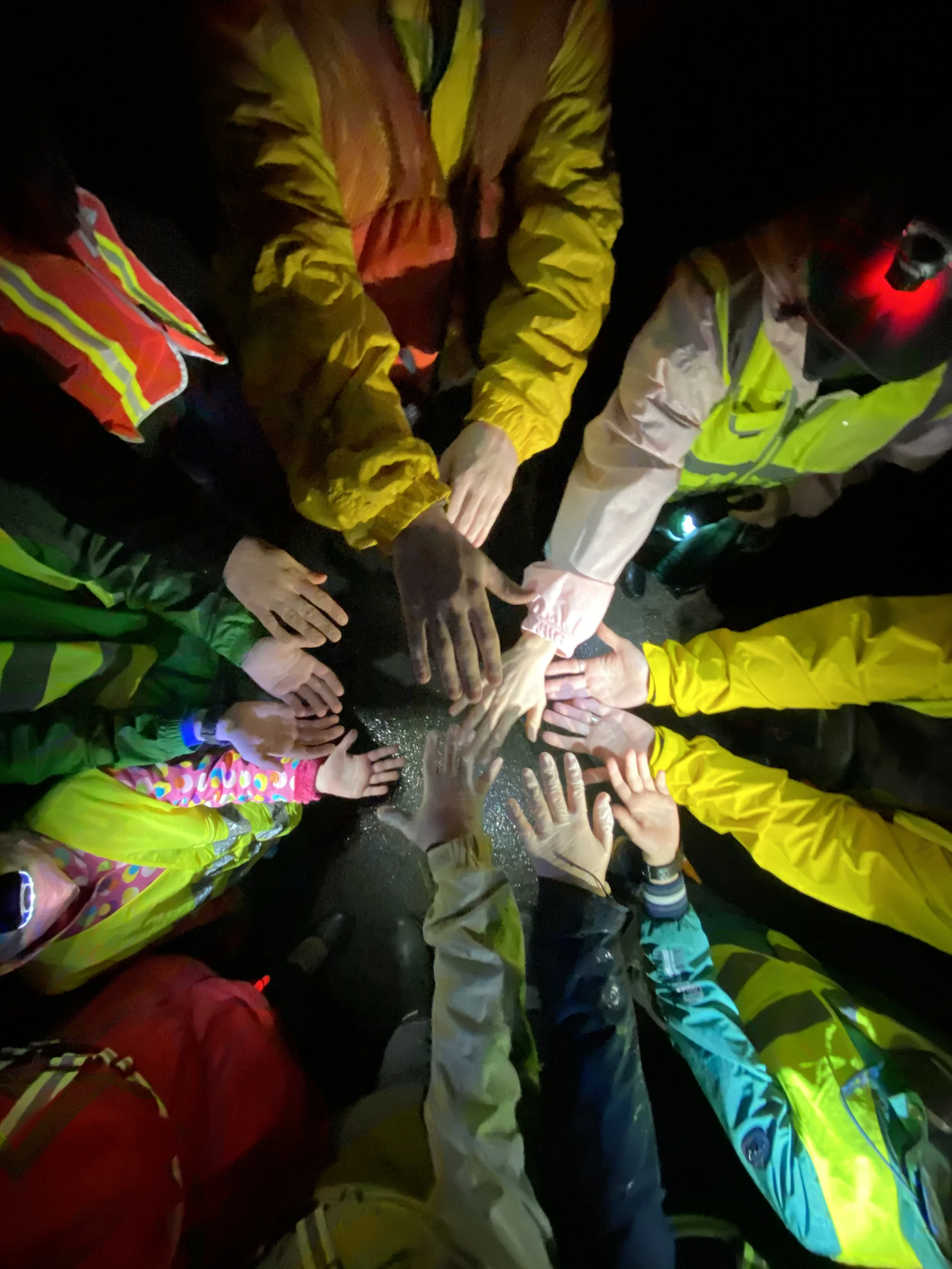
Dress FLASHY! DO NOT wear dark clothing
Bring your headlamps and flashlights
Work in pairs or small groups
We have printed some “Slow Amphibians Xing” signs and will be placing those by some known crossings.
TRAINING:
The Hudson River Estuary Program and Cornell University will be presenting a virtual session to orient new participants of the Amphibian Migrations and Road Crossings Project. RSVP (coming soon). The program will include:
an overview of how to volunteer
data collection methods (including a demo showing how to submit data on Survey123)
safety tips
review of commonly asked questions.
Returning volunteers looking for a refresher are also welcome. Note that we recommend all AM&RC volunteers view recorded training presentations on YouTube.
Check out the “Resources for Volunteers” section of the DEC’s Amphibian Migrations and Road Crossings website to read the important information in the Volunteer Handbook, view volunteer training sessions, and find additional resources including safety information and identification help.
Background
In 2021, our Big Night was March 24 and the event was a wonderful success! Our Ferncliff Forest and Chancellor Livingston School locations saw a good variety of critters. Astor Drive was mostly just frogs. In 2022, we think the Big Night happened when there was a crazy lightning storm when we weren’t out. 2025 the rain came in the middle of the night as well. In addition to our regular three spots, we explored a location to the South of Southlands but did not see any activity.
Thank you so all our volunteers who showed up to help track and assist amphibians cross the road. A huge thank you to Carli Fraccarolli from our CSC Task Force for organizing and Winnakee too!
A big thanks goes out to the Rhinebeck Police Department and the Village and Town Highway Departments for safety assistance.
Photo by Dairo Chamorro